

-
 admin
- 29th October 2026
Electric Forklift Aisle Width and Turning Radius Specifications
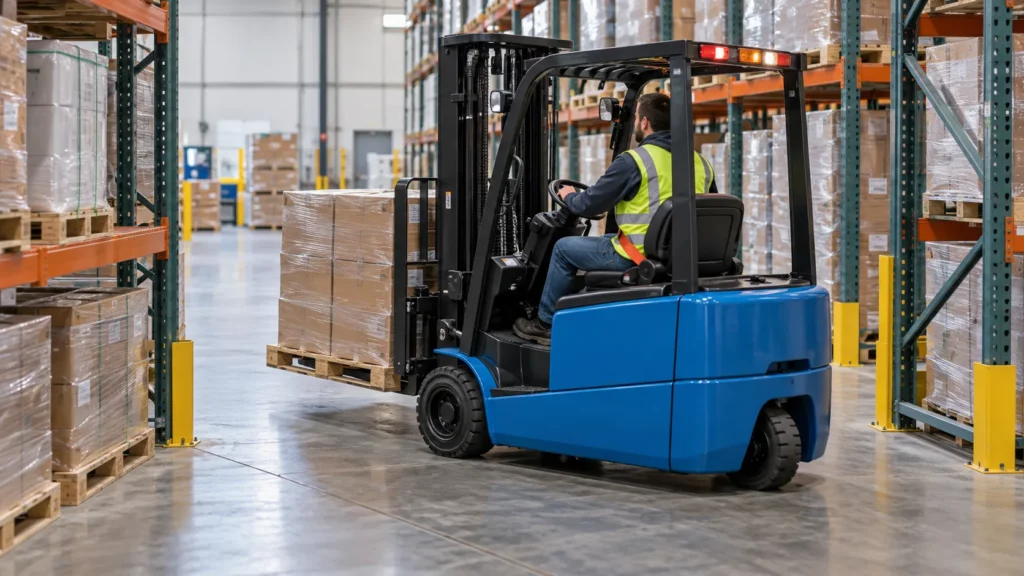
Electric forklift aisle width cannot be selected from one generic number. The correct working aisle depends on the exact Forklift, pallet or load, fork and attachment configuration, turning geometry, rack layout, and operating clearance. Turning radius is one input, but it is not the same as the right-angle stacking aisle. Buyers should request a configuration-specific data sheet or dimensional drawing, then validate the route before ordering equipment or fixing rack positions.
Specifications That Control Aisle Fit
A useful specification review starts with the complete Forklift and load envelope. Manufacturers may use symbols such as ‘Wa’ for turning radius and ‘Ast’ for right-angle stacking aisle, but notation and test assumptions can vary. Confirm every term on the supplier’s drawing instead of comparing symbols alone.
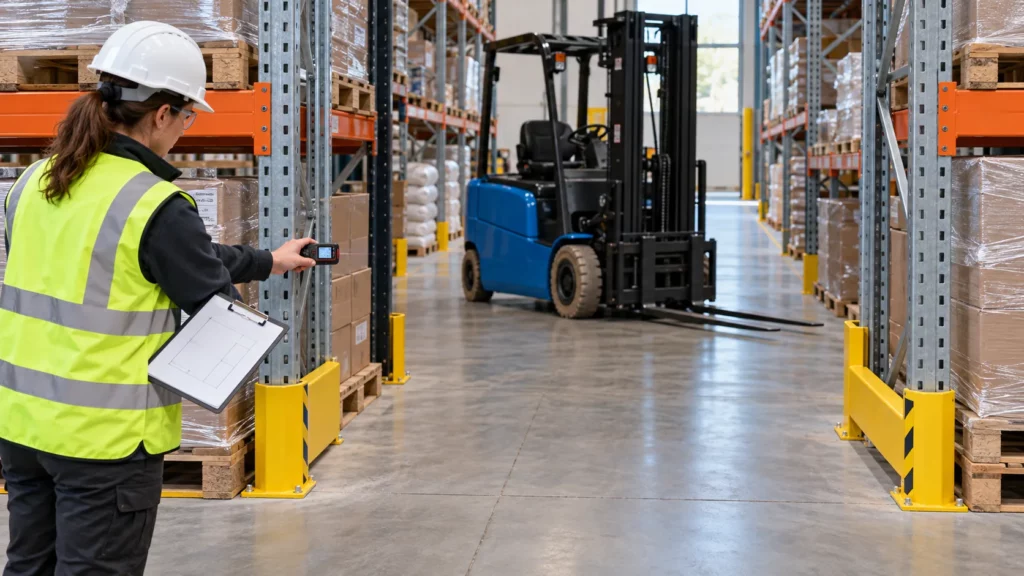
- OverallForklift width shows whether the chassis can pass through a straight opening, but it does not prove that the Forklift can turn into a rack bay.
- Length to the fork face, wheelbase, steering layout, and counterweight shape affect the swept path and rear-end swing.
- Turning radius describes the minimum circular turn under defined test conditions. It usually excludes the full working effect of a long pallet or load overhang.
- Right-angle stacking aisle width describes the straight aisle needed to turn 90 degrees and enter or leave a storage position with a defined load.
- Load length, load width, fork length, attachment projection, and load center change the real space required for the maneuver.
Why Turning Radius Is Not the Required Aisle Width
A Forklift can make a compact circle and still need a wider aisle to square a pallet with the rack. During a 90-degree approach, the counterweight swings outward while the forks and load sweep toward the opposite side. The maximum envelope may occur midway through the turn, not when the Forklift is straight. That is why aisle planning should use the manufacturer’s right-angle stacking value for the proposed load whenever it is available.
A data sheet value also needs context. Check whether it assumes a standard pallet, a particular fork length, no attachment, a specific mast, new tires, and a nominal clearance. A different attachment or longer load can move the center of gravity forward and increase both space and capacity constraints.
A Practical Aisle Width Calculation Method
Start with the supplier’s Ast or equivalent right-angle stacking specification for the exact configured Forklift. Confirm the load dimensions used in that figure. If the supplier provides only a basic Forklift turning or stacking dimension, add the actual load length and any overhang in the manner defined by that manufacturer’s drawing. Then add an operating allowance based on the site’s risk assessment, rack protection, pallet placement tolerance, steering correction, and traffic rules.
Do not treat a popular formula or a fixed clearance allowance as a universal design standard. Different drawings measure from different points, and local building, fire, access, and occupational-safety requirements may control more space than the Forklift needs mechanically. Record whether the final number is rack face to rack face, guard to guard, or clear opening between obstructions.
Three Wheel and Four Wheel Electric Forklifts
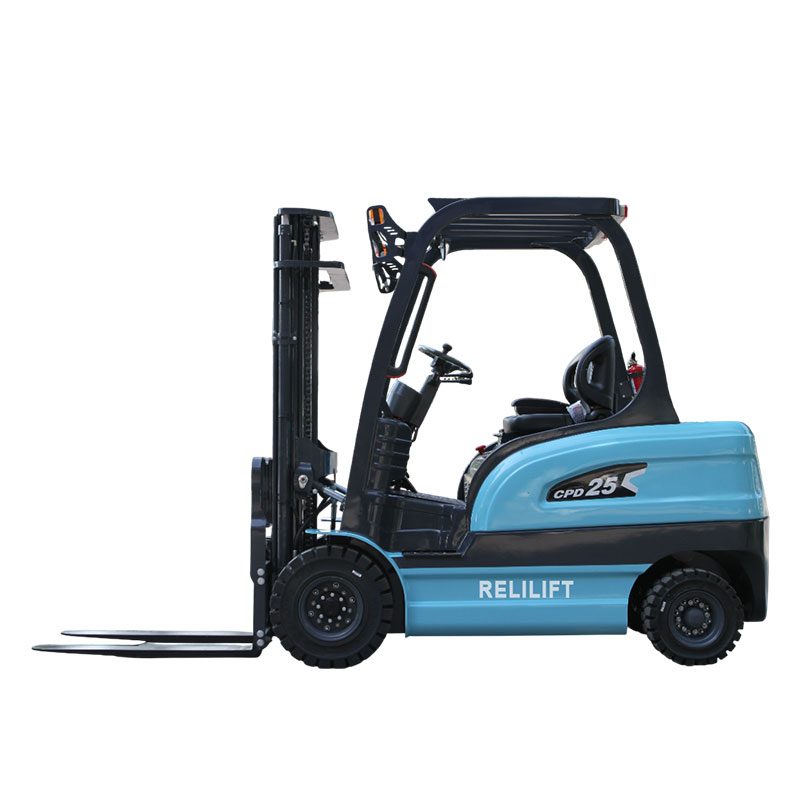
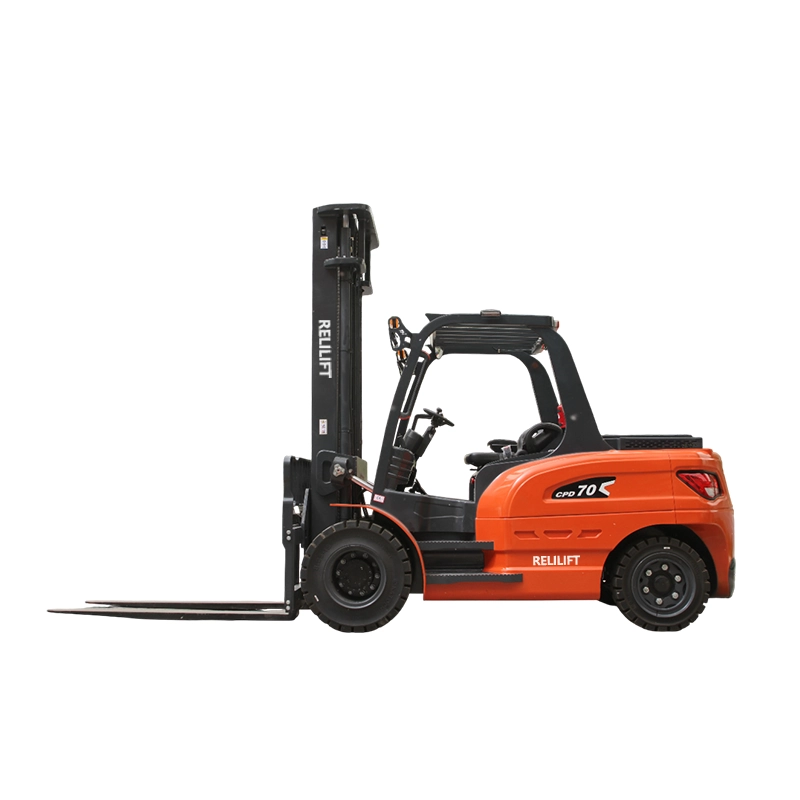
Three-wheel electric counterbalance Forklifts often offer a tighter turning radius because the steering geometry can pivot more sharply. They can suit smooth indoor floors and frequent maneuvering. Four-wheel Forklifts may be considered for heavier loads, longer travel, ramps, uneven transitions, or applications that need a different stability and ride profile. These are category tendencies, not a substitute for comparing exact specifications.
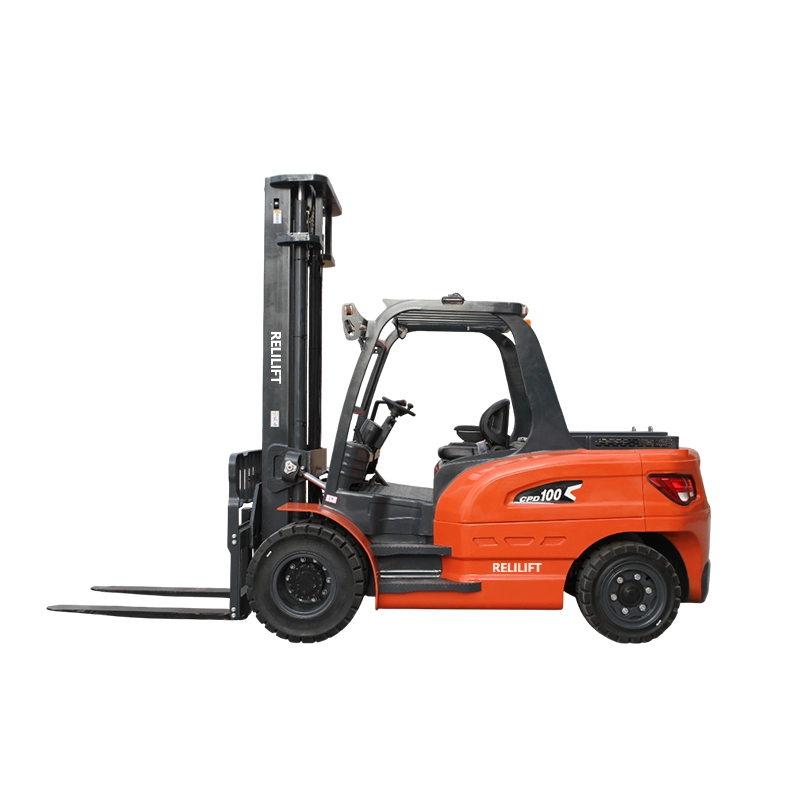
RELILIFT lists electric counterbalance forklifts across several capacity classes. Review the RELILIFT electric forklift range as a starting point, then request the turning and stacking dimensions for the selected mast, tires, battery, forks, and attachments.
Load and Configuration Changes That Affect the Result
Pallet orientation matters. A 48 by 40 inch pallet requires a different turn depending on which side faces the rack. Long loads, bins, paper rolls, side shifters, clamps, fork positioners, and extended forks can enlarge the swept path. They may also reduce residual capacity at height. The aisle review and the capacity review should therefore use the same load and attachment assumptions.
Tire wear, steering stops, battery weight, mast selection, and optional equipment can also change the configured Forklift. Ask the supplier to identify which dimensions are fixed and which must be recalculated. If multiple pallet sizes are used, make a matrix and design around the most demanding approved combination rather than the average load.
Measure the Complete Route
Measure rack faces, rack guards, upright posts, columns, doors, staging areas, cross aisles, dock approaches, trailer entrances, elevators, floor joints, and overhead obstructions. Include pedestrian routes and one-way or two-way traffic rules. The broader electric forklift buying guide explains how aisle geometry connects with load, lift height, floor condition, battery duty, and equipment selection.
The OSHA narrow aisle guidance cites about 12 feet for conventional counterbalance layouts. Treat this as context, not a design guarantee for a specific Forklift, load, or facility.
Add Operating and Safety Allowance
The minimum geometric fit is not automatically a practical working aisle. Allow for pallet misalignment, rack guards, steering corrections, load sway, tire condition, visibility, and normal variation among trained operators. Pedestrian separation, emergency access, fire protection, and marked aisle requirements may set wider limits. A route that works only with perfect positioning has no useful operating margin.
Validate the Layout Before Release
- Obtain a dimensional drawing and right-angle stacking specification for the exactForklift, mast, forks, tires, battery, and attachments.
- Record the largest approved load dimensions, orientation, overhang, center, weight, and required lift height.
- Plot the manufacturer’s turning envelope on the proposed rack layout, including columns, guards, staging, and cross-aisle traffic.
- Mark a controlled test aisle and run the proposedForklift and load at low speed with a qualified operator and evaluator.
- Observe rear-end swing, fork-tip clearance, load sweep, visibility, steering correction, and space needed to recover from imperfect alignment.
- Document the approved aisle, load,Forkliftconfiguration, traffic rule, and any operating restriction so future changes trigger a new review.
Procurement Information to Send the Supplier
A useful RFQ should include rack-to-rack dimensions, guards and columns, cross-aisle widths, door and overhead clearances, pallet sizes and orientations, load overhang, weight, load center, lift height, attachments, floor and ramp conditions, shift pattern, and traffic rules. Ask for Ast, turning radius, overall width, length to fork face, fork dimensions, residual capacity, and a drawing of the proposed configuration.
For confined retail or stockroom routes, RELILIFT’s narrow-aisle logistics solution identifies compact pallet Forklifts and walkie stackers as alternatives where a counterbalance forklift is not the best fit. RELILIFT also offers customized material handling solutions; the final drawing and operating limits should still be confirmed in writing for the selected equipment and site.
Conclusion
Turning radius helps describe maneuverability, but right-angle stacking width, load geometry, and operating allowance determine whether an electric forklift can work in an aisle. Use one consistent configuration across the data sheet, capacity review, layout drawing, and site test. A measured and validated envelope is more reliable than any generic aisle-width chart.
Frequently Asked Questions
Is Forklift Turning Radius the Same as Aisle Width
No. Turning radius describes a circular turn under stated conditions. Working aisle width must also account for Forklift length, rear swing, forks, load dimensions, pallet orientation, and operational clearance.
What Is a Typical Aisle Width for a Counterbalance Forklift
OSHA’s e-Tool uses about 12 feet as context for conventional rack systems, but the correct width depends on the exact Forklift, load, attachments, layout, and applicable site requirements.
How Much Extra Clearance Should Be Added
There is no universal allowance. Set it from the manufacturer’s method, the site risk assessment, rack protection, pallet tolerance, traffic pattern, operator correction space, and local requirements.
Can a Forklift Fit Even If the Pallet Does Not
Yes. Chassis width proves only straight-line clearance. A long or wide pallet can strike racks or guards during a turn, so the complete loaded swept path must be checked.
Request a Layout Fit Check
Send the aisle drawing, rack and guard dimensions, pallet size and orientation, load weight and center, lift height, attachments, floor conditions, traffic rules, and quantity to contact RELILIFT’s technical team. Request configuration-specific turning, stacking, capacity, and clearance information before finalizing the layout.


 Related




Excellent Service Each and Every Time