

-
 admin
- 1st October 2026
Electric Forklift Buying Guide: How to Choose the Right Truck for Your Warehouse
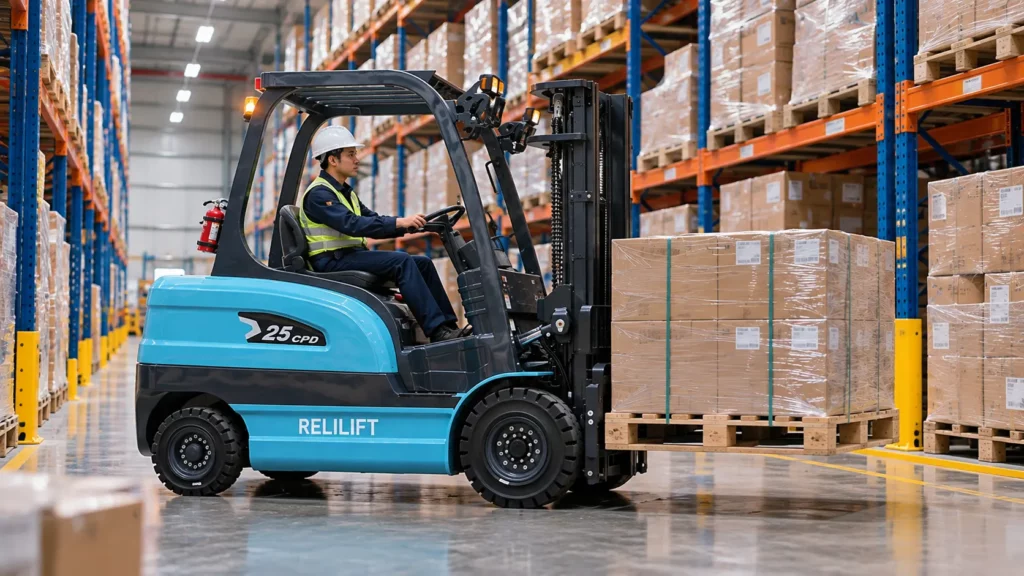
Choose an electric forklift by working backward from the heaviest real load, required lift height, load center, aisle geometry, floor and ramp conditions, and daily duty cycle. Then match the battery, mast, tires, attachments, and service plan to those conditions. Rated capacity alone is not enough: a truck that can lift a load at floor level may have lower residual capacity at height or when fitted with an attachment.
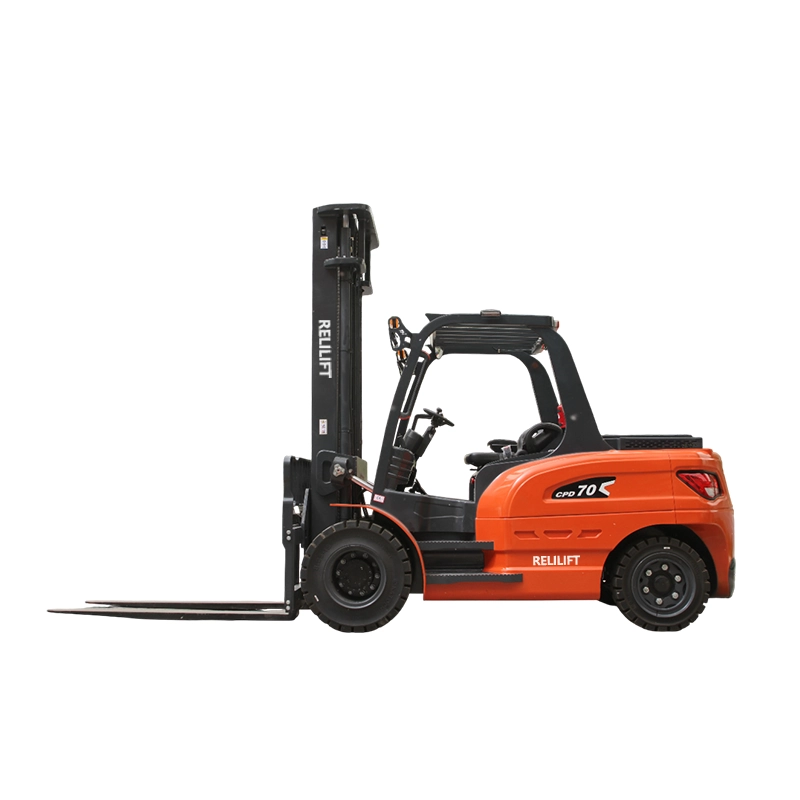
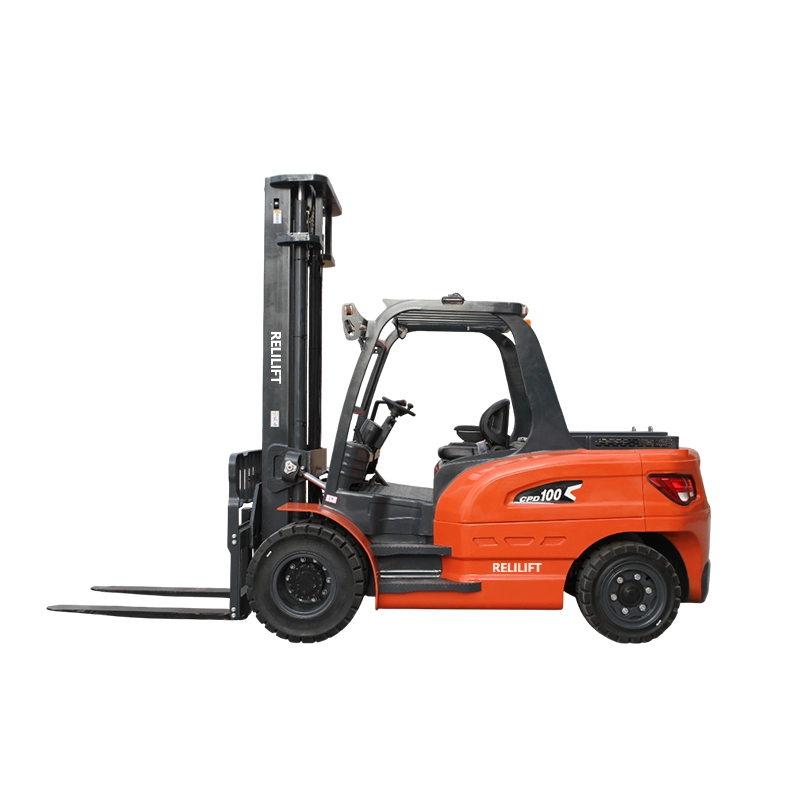
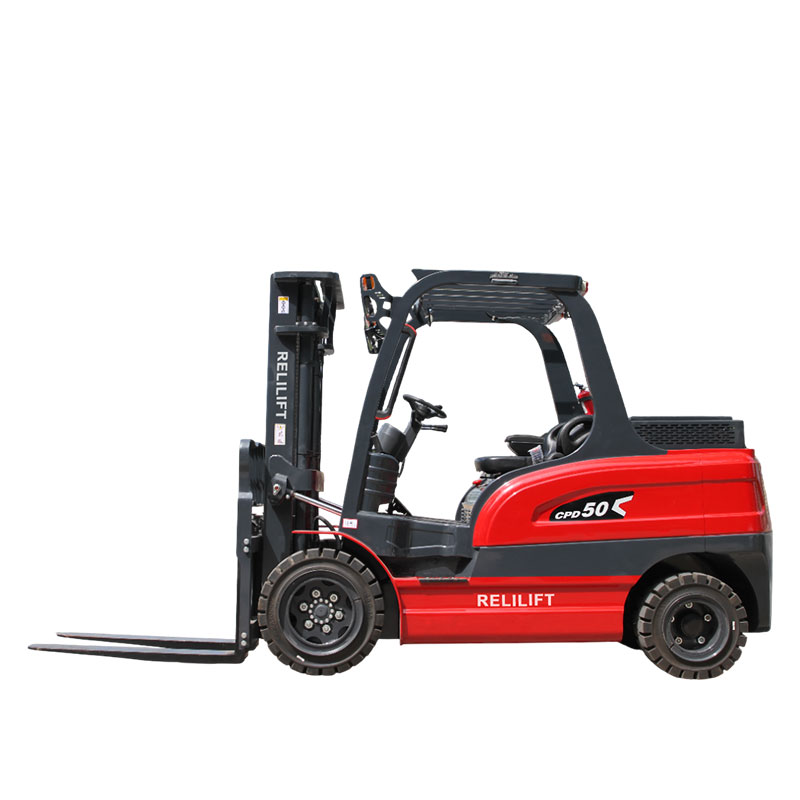
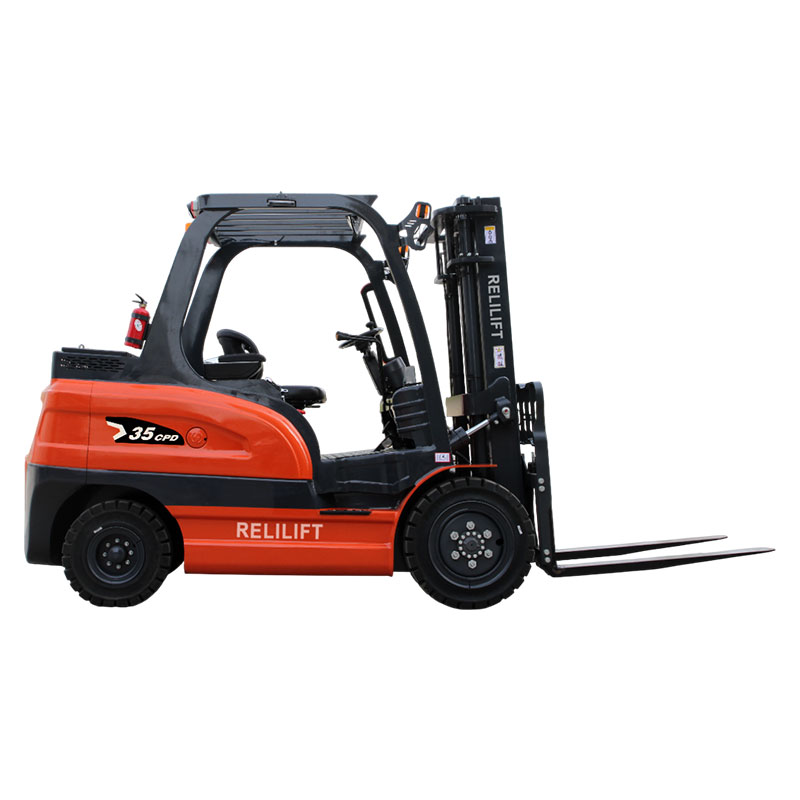
For warehouse buyers, the practical goal is not the largest truck available. It is the smallest correctly configured truck that can complete the full task with an adequate safety margin. RELILIFT’s current electric forklift range includes counterbalanced models across several capacity classes, but the final specification should always be checked against the application data and the model’s capacity chart.
Define the Load Before Comparing Forklifts
Start with the maximum operating load, not the average pallet. Include the pallet or container, packaging, any off-center weight, and the weight and forward projection of attachments. Record the load length and width because a longer load moves its center of gravity farther from the fork face. That change can reduce usable capacity even when the scale weight appears to be within the truck’s nominal rating.
Next, document the highest fork elevation needed and the rack beam where the load must be placed. Ask the supplier for the residual-capacity rating at that height, with the proposed mast and attachment. Also check the lowered mast height against doors, mezzanines, trailers, sprinklers, and other overhead constraints. These four inputs should appear on every quotation request:
- Maximum load weight, load dimensions, and expected load center.
- Maximum lift height and the required free-lift behavior.
- Attachment type, fork length, and any side-shift requirement.
- Lowest overhead clearance along the complete travel route.
Measure the Warehouse, Not Just the Aisle
Aisle width is only one part of maneuverability. Measure the narrowest working aisle, right-angle stacking clearance, rack-to-rack distance, intersection width, dock approach, door openings, and space needed to turn with the longest load. Compare those measurements with the supplier’s right-angle stacking and turning specifications for the exact configuration. Leave operational clearance for imperfect pallet placement and normal steering corrections.
A three-wheel electric forklift often suits tighter indoor layouts because of its compact turning behavior. A four-wheel counterbalance truck may be preferable when the route includes longer travel, uneven transitions, ramps, or heavier loads. The correct choice depends on the complete route rather than a single catalog dimension. Confirm floor loading, rack protection, trailer entry, gradient, dock-plate capacity, and whether the truck must work inside containers.
Choose the Truck Configuration for the Workflow
A counterbalance electric forklift is a versatile choice when the same truck must unload vehicles, move pallets across the floor, and place them in racking without outriggers entering beneath the load. In very narrow aisles or high-density storage, a reach truck or another warehouse-specific design may use space more efficiently. For low-level stacking and short horizontal moves, an electric stacker may be the more economical tool. The equipment category should be selected before comparing individual models.
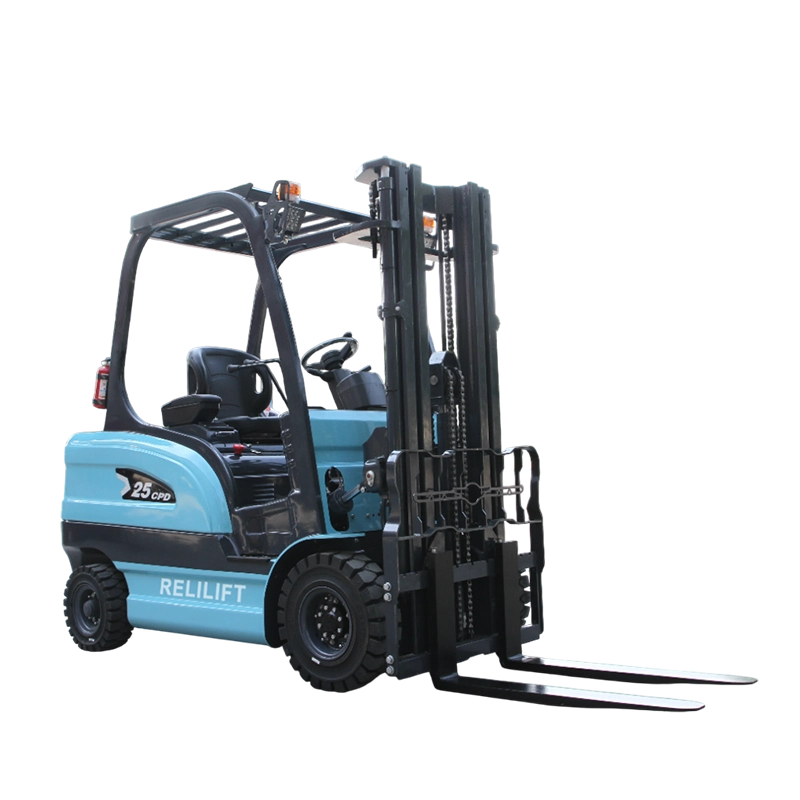
If the application sits between a compact stacker and a counterbalanced truck, use this electric stacker versus forklift comparison to clarify the workflow boundary. Then decide whether the operator must remain seated for long travel, whether the truck must enter trailers, and how often it will stack at maximum height. These questions usually matter more than a small difference in headline capacity.
Match the Battery System to the Duty Cycle
Estimate energy demand from hours per shift, travel distance, lift frequency, load weight, gradients, ambient temperature, and available charging windows. A single-shift operation with a long overnight window has different requirements from a multi-shift warehouse that needs opportunity charging during breaks. Confirm usable battery capacity, expected runtime under your duty profile, charger compatibility, charging time, electrical supply, battery warranty terms, and the effect of cold or hot conditions.
Lithium-ion systems can reduce routine battery handling and support flexible charging, while lead-acid systems may offer a familiar service process and a lower initial battery cost in some markets. Lead-acid batteries also require appropriate charging space and maintenance procedures. Do not select by chemistry alone. Compare the complete battery-and-charger package, replacement availability, thermal controls, charging rules, and the supplier’s written operating limits for the proposed truck.
Check Floors, Ramps, Tires, and Operating Environment
Electric forklifts are well suited to indoor work because they have no tailpipe exhaust at the point of use and can operate with less engine noise than combustion trucks. That does not make every model suitable for every building. Battery charging, ventilation, fire protection, and electrical installation must follow applicable local requirements. Food, cold-storage, dusty, corrosive, or clean-production areas may also require application-specific materials or protection that should be confirmed in writing.
For outdoor or mixed indoor-outdoor routes, verify rain exposure, temperature range, ground clearance, ramp grade, drainage, and traction. Tire choice affects comfort, stability, floor marking, and tolerance of surface joints. Cushion or solid tires are common on smooth floors, while pneumatic-style options may improve ride quality on rougher yards. The truck, tire, and floor combination must be evaluated together; never assume an indoor model can handle a damaged yard simply because its rated capacity is sufficient.
Operator visibility and ergonomics also belong in the specification. Review sightlines through the mast, control layout, seat and restraint design, entry steps, lighting, warning devices, and speed-control options. Employers should complete the required workplace risk assessment and ensure operators receive appropriate training for the truck and site conditions.
Compare Total Cost and Supplier Support
Purchase price is only the first cost. Build a multi-year comparison that includes the battery and charger, energy, planned maintenance, tires, inspections, wear parts, downtime, operator time, and eventual battery replacement. A cheaper truck can become expensive if the correct part is difficult to identify or technical support is slow. Conversely, a premium feature has little value if the duty cycle will not use it.
Ask each supplier for a configuration-specific quotation, dimensional drawing, capacity information, battery and charger specification, maintenance schedule, parts list, warranty scope, and expected technical-response process. RELILIFT presents both customized material handling solutions and all-round after-sales support; buyers should still confirm the exact deliverables, response terms, and spare-parts scope in the final commercial agreement.
Send a Complete Electric Forklift RFQ
A detailed request for quotation reduces mismatched proposals and makes supplier comparisons more meaningful. Include photographs or a simple route drawing when dimensions are difficult to explain. At minimum, send:
- Maximum and typical load weight, dimensions, center of gravity, and pallet type.
- Lift height, rack dimensions, aisle measurements, door height, and turning constraints.
- Travel distance, shifts per day, charging windows, gradients, and floor condition.
- Indoor, outdoor, temperature, dust, moisture, hygiene, and noise requirements.
- Required attachments, fork dimensions, tires, operator features, and delivery quantity.
Conclusion
The right electric forklift is the one that remains correctly rated at the required height, fits the warehouse with operating clearance, matches the shift’s energy demand, and can be supported throughout its working life. Capacity, aisle width, battery chemistry, and price are connected decisions; changing one can alter the others.
Before issuing a purchase order, verify the proposed configuration against a site survey or a complete application worksheet. Request written confirmation of residual capacity, dimensions, charger requirements, operating limits, and included support. This final check is more reliable than choosing from a generic specification sheet.
Frequently Asked Questions
What size electric forklift is best for a warehouse?
There is no universal best size. Select capacity from the heaviest load, load center, lift height, mast, and attachment combination, then confirm residual capacity. Also verify that the configured truck can maneuver through the narrowest route with practical clearance.
Is a three-wheel or four-wheel electric forklift better?
Three-wheel trucks are often considered for tighter indoor turns. Four-wheel trucks may suit heavier loads, longer travel, ramps, or mixed surfaces. The decision should be based on capacity, stability, route geometry, floor condition, and the manufacturer’s configuration data.
How long does an electric forklift battery last per charge?
Runtime varies with battery capacity, load, lift frequency, travel, gradients, temperature, truck efficiency, and battery condition. Give the supplier a realistic duty profile and ask for a written battery-and-charger recommendation rather than relying on a general hourly claim.
Can an electric forklift work outdoors?
Some configurations can support mixed or outdoor work, but suitability depends on weather protection, temperature limits, ground clearance, traction, tire type, ramp grade, and surface quality. Confirm the exact model’s environmental limits before purchase.
For a configuration review, send the application data to RELILIFT’s technical team. Include the load, lift height, aisle and door dimensions, route conditions, duty cycle, charging window, attachments, and quantity so the team can evaluate an appropriate electric forklift configuration.


 Related





Excellent Service Each and Every Time