

-
 admin
- 8th October 2026
Electric vs. Propane Forklifts: Which One Fits Your Operation?
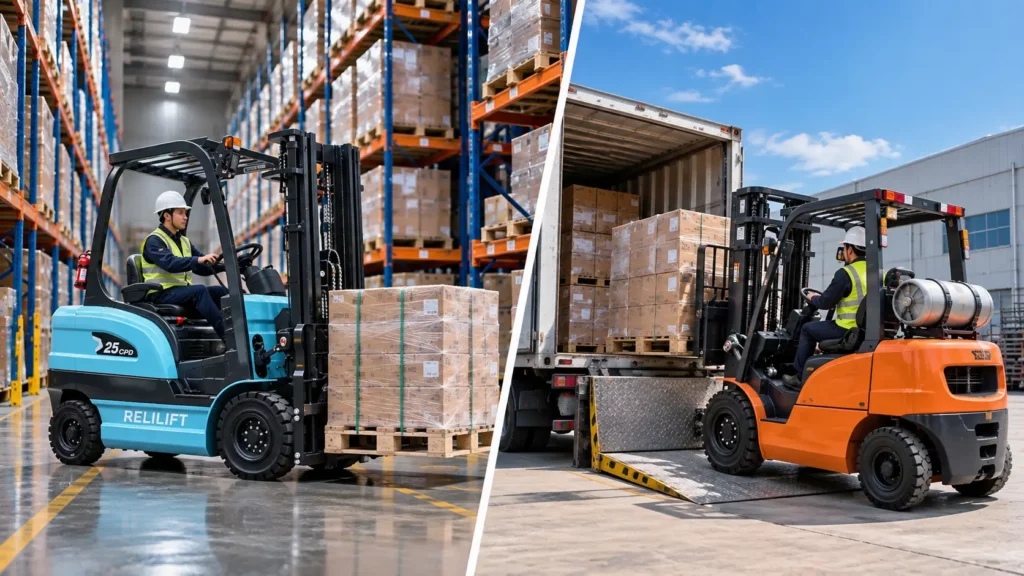
The electric-versus-propane question rarely comes down to which forklift is better in general. It comes down to what happens at 10:30 on a busy shift. Does the truck have a charging window, or must it return to work within minutes? Does it stay inside, or cross a rough yard between buildings? Those details usually decide the answer before a price quote does.
For an indoor operation with predictable hours, electric is often the more comfortable fit: no tailpipe exhaust at the point of use, less engine noise, and fewer combustion-related service items. Propane remains useful where quick refueling and mixed indoor-outdoor travel matter. Neither option wins every cost or performance comparison, so the sensible approach is to match the power source to the job and calculate ownership cost from local numbers.
Start With the Shift, Not the Fuel
A forklift that works six steady hours and then sits overnight has a very different energy problem from one shared across two shifts with uncertain overtime. In the first case, an electric truck may finish its work and recharge when the building is quiet. In the second, charging has to be designed into breaks, shift changes, or battery exchanges. If that plan is weak, an otherwise suitable electric forklift becomes a scheduling problem.
Propane changes that rhythm. When a full cylinder is ready and the handling procedure is in place, the truck can be refueled quickly. That convenience is valuable, but it is not free of planning. Someone still has to manage deliveries, cylinder inventory, compliant storage, inspections, and safe changes. Buyers sometimes compare a complete electric charging setup with only the propane truck price; that is not an even comparison.
A week of operating records is more useful than saying the site runs ‘one shift.’ Record productive hours, idle time, breaks, peak days, and overtime so suppliers can see whether a real charging window exists.
Where the Money Actually Goes
Propane forklifts often look less expensive at purchase. Electric trucks may carry more upfront cost once the battery and charger are included, especially if the building needs electrical work. Yet the invoice is only the opening entry in the cost ledger. Fuel or electricity, maintenance, downtime, tires, inspections, and operator time continue for years.
For electric equipment, ask whether the quotation includes the battery, charger, connectors, installation, and commissioning. A lead-acid setup may need watering, ventilation, and a defined charging area. Lithium-ion may allow opportunity charging, but the battery, charger, and truck must be compatible. Include future battery replacement in the budget.
For propane, use the delivered fuel price rather than a national average. Add cylinder rental or ownership, storage, handling time, and engine and LPG-system maintenance. These items do not prove propane will cost more; they prevent a low purchase price from being mistaken for a low total cost.
A TCO Comparison That Can Survive Review
A useful total cost of ownership model puts both trucks through the same workload and ownership period. Over three to five years, compare productive operating hours, energy, maintenance, likely repairs, battery or engine-related allowances, downtime cover, and residual value.
Do not overlook interruption cost. A charger failure, unavailable battery, empty cylinder cage, or delayed service visit can stop work. At a dock feeding production, one lost hour may outweigh a small difference in energy price.
Performance on the Floor
Electric forklifts suit controlled warehouse work, with smooth low-speed response and no engine warm-up. Propane trucks can move readily between buildings, docks, and yards, while a fast cylinder change supports an unpredictable schedule. The trade-off is more heat, noise, and exhaust to manage.
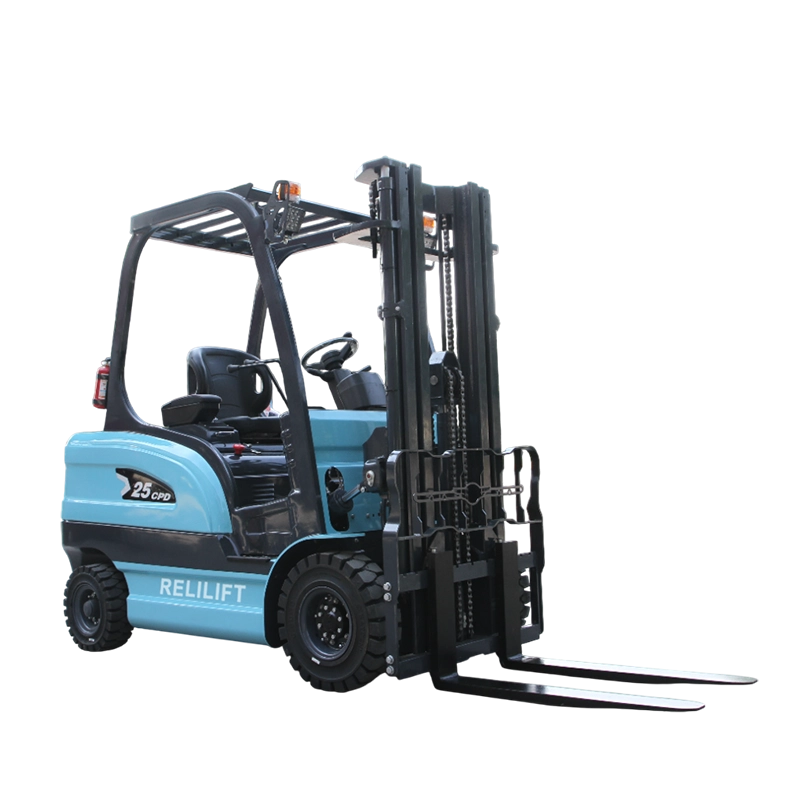
Power source, however, does not determine whether a truck is correctly specified. The decisive figures are residual capacity at the required height, mast arrangement, attachment derating, tire choice, turning space, gradeability, and ground clearance. A nominal capacity on a product page cannot replace the capacity information for the final configuration.
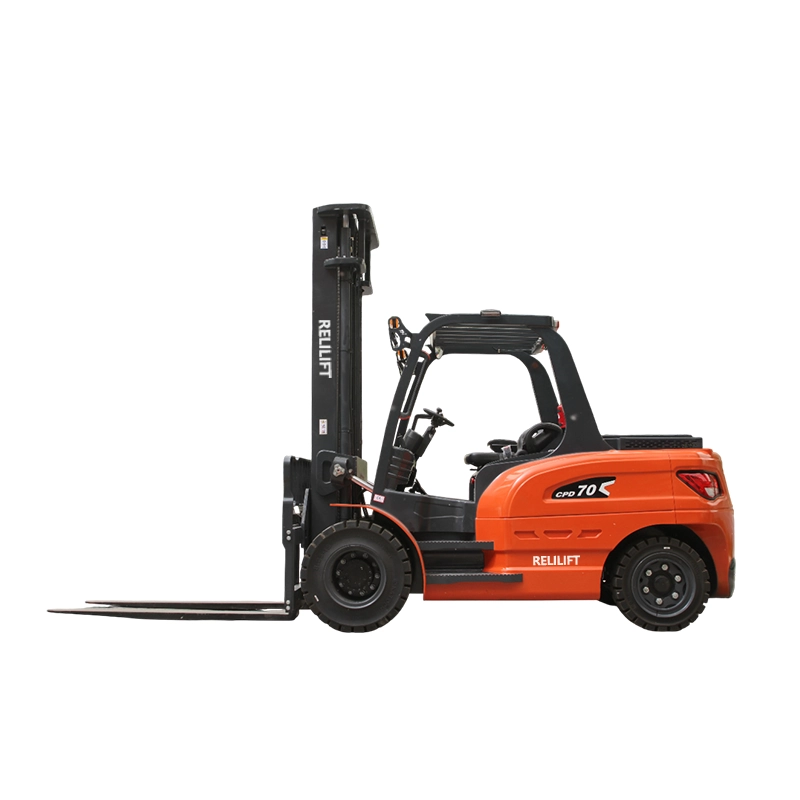
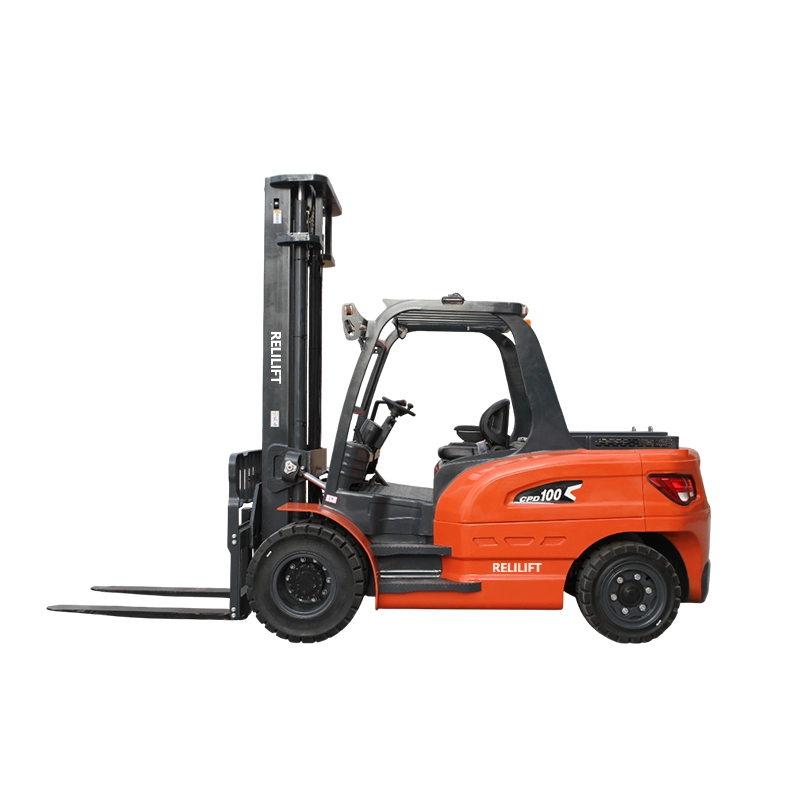
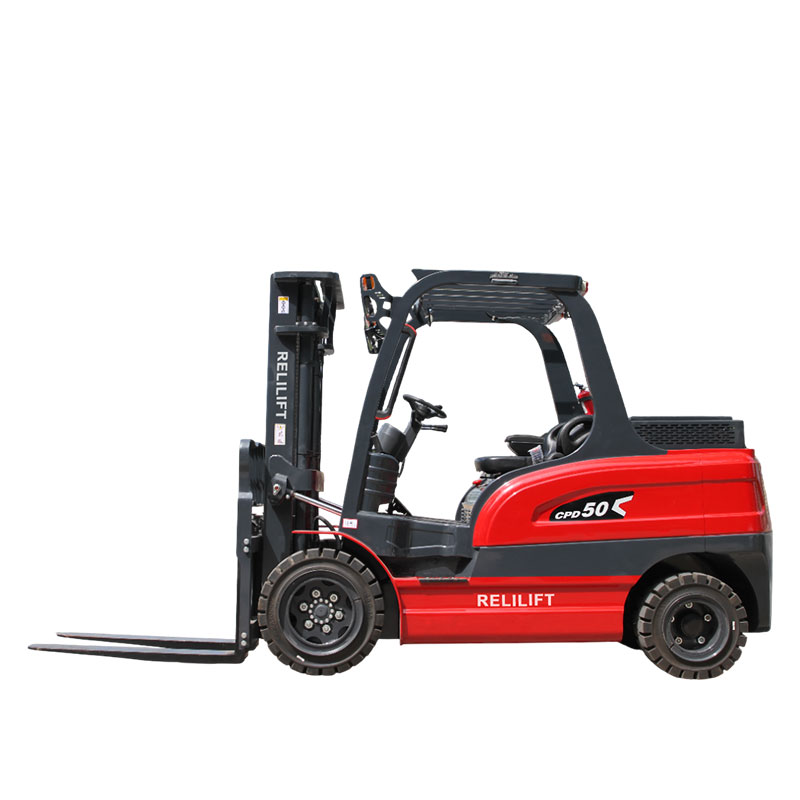
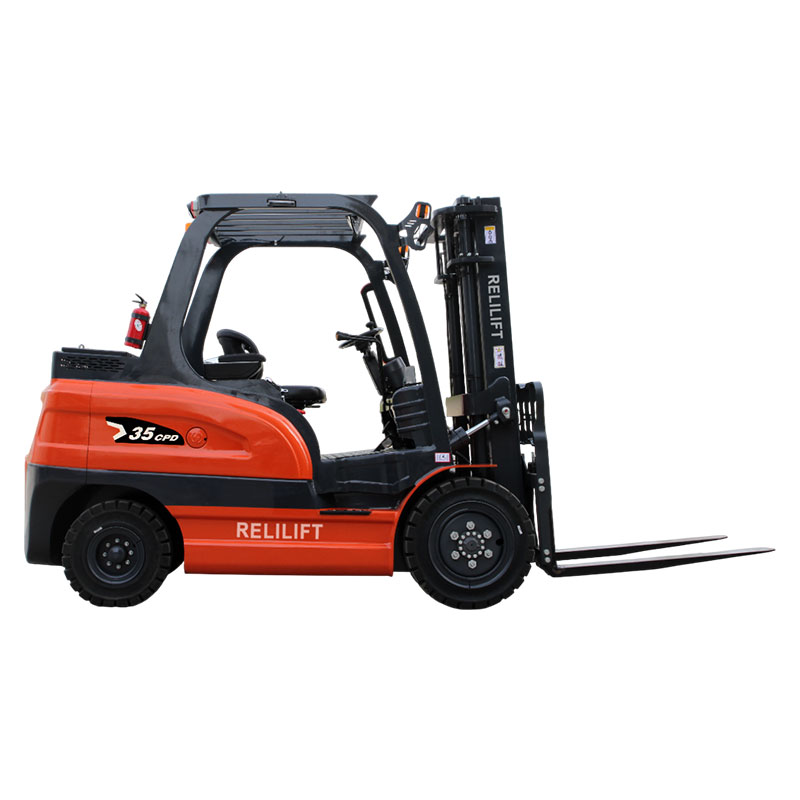
RELILIFT’s electric forklift range spans several capacity classes. That gives buyers a starting point, but the shortlist should be built from the heaviest real load, its load center, the highest placement point, and the complete travel route. A truck that lifts the load at floor level may not retain the same capacity at height.
Indoor Air, Noise, and the Outdoor Route
Inside enclosed warehouses, electric creates no tailpipe exhaust at the point of use and operates with less engine noise. Charging still needs suitable electrical protection, and lead-acid systems may bring ventilation and maintenance requirements.
Propane may be used indoors only where equipment, ventilation, monitoring, storage, and work practices meet applicable requirements. Combustion can produce carbon monoxide and other exhaust gases, so suitability must be assessed for the actual building and duty cycle.
Propane is often convenient on covered docks and mixed routes, while some electric models can also work outside. Neither fuel makes a truck all-terrain. Confirm weather exposure, temperature, ramps, surface condition, traction, tires, and ground clearance in writing.
Maintenance: Fewer Parts Does Not Mean No Plan
Electric trucks remove engine oil, spark plugs, and combustion fuel-system service, but brakes, hydraulics, mast components, tires, electrical connections, and the battery still need attention. Propane adds engine and LPG-system work. The relevant question is which truck the site can keep available.
Ask for the maintenance schedule, common spare-parts list, diagnostic process, warranty exclusions, and service response route before comparing final prices. RELILIFT describes its after-sales support as including technical guidance, troubleshooting, spare parts, maintenance, and remote or on-site support. The exact coverage and response terms for the destination should still appear in the commercial agreement.
Which Applications Favor Each Type?
Electric usually makes the stronger shortlist for indoor sites with smooth floors and repeatable schedules, especially where quiet travel, low point-of-use emissions, and a natural charging window matter.
Propane deserves consideration when a truck crosses indoor and semi-outdoor areas, hours change without warning, or fast refueling is simpler than charging. Reliable fuel supply, compliant storage, ventilation, and technical support remain essential.
There is also a third possibility: the job may not require a counterbalanced forklift. Short transfers and lower stacking tasks can sometimes be handled by an electric stacker. This electric stacker and forklift comparison helps separate those applications before buyers pay for reach, travel speed, or capacity they will rarely use.
What to Send With the RFQ
A capacity figure alone produces weak quotations. Include load weight and dimensions, load center, lift height, attachment, aisle and door measurements, ramps, floor condition, indoor and outdoor exposure, temperature, operating hours, breaks, and destination. Add the available power and charging windows for electric, or fuel-storage and cylinder constraints for propane.
Ask the shortlisted supplier to return three items that can be checked side by side:
- Residual-capacity information and dimensions for the quoted mast, forks, and attachments.
- A complete energy or fuel package, including facility requirements and exclusions.
- A maintenance, warranty, parts, and response plan for the destination market.
Where a standard configuration misses the route or load, RELILIFT’s customized material handling solutions include adjustments to lift height, capacity, and fork dimensions. Any change should be reflected in the final dimensional drawing and capacity information, not left as a verbal assumption.
Conclusion
Choose electric when the work is mainly indoors, the daily energy requirement can be planned, and the facility is ready to support charging. Choose propane when rapid refueling and a mixed route solve a real operating problem, and the site can manage ventilation, fuel storage, and engine maintenance properly.
Then challenge that first choice with actual costs and application data. The right forklift is the one that remains correctly rated at height, fits the route, stays available through the working day, and can be supported after delivery.
Frequently Asked Questions
Is an electric forklift cheaper to run than a propane forklift?
It often has a lower energy and routine-maintenance burden, but the result depends on local rates, utilization, charging infrastructure, battery replacement, propane delivery, and downtime. Compare both options per productive operating hour.
Can an electric forklift cover two shifts?
Yes, when battery capacity and charging are designed around the real schedule. Opportunity charging, fast charging, or a spare battery may be needed. Break length, electrical capacity, temperature, and utilization should be checked first.
Can a propane forklift operate inside a warehouse?
It may be suitable in some buildings, but ventilation, exhaust monitoring, equipment condition, cylinder storage, and operating procedures are critical. Applicable workplace, fire, and local requirements must be confirmed for the site.
Which type is better for outdoor work?
Neither power source guarantees outdoor suitability. Check the exact model’s weather protection, tires, traction, temperature limits, gradeability, ground clearance, and permitted operating environment.
Request an Application Review
For an application review, send the operating details to RELILIFT. Include the load, lift height, route, shift pattern, charging or fuel constraints, attachments, destination, and quantity. That information is enough for a useful first-pass configuration discussion without turning the inquiry into a generic price request.


 Related





Excellent Service Each and Every Time