

-
 admin
- 15th October 2026
Electric Forklift Cost and Productivity Planning for Bulk Material Transfer
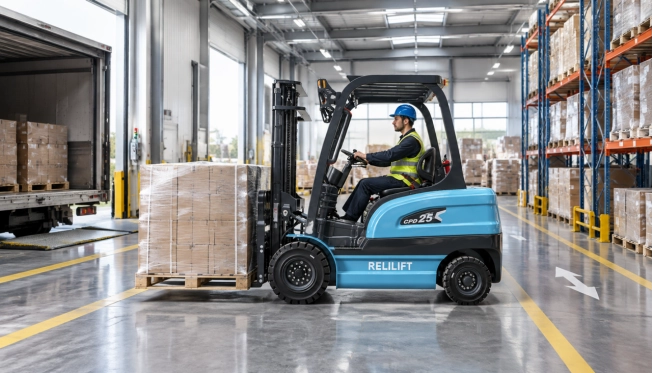
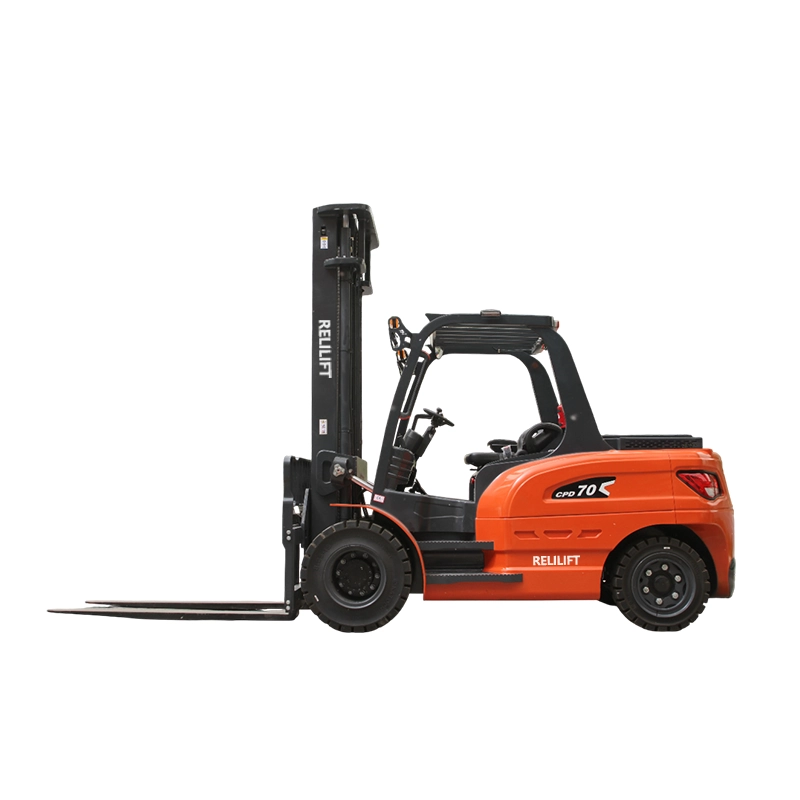
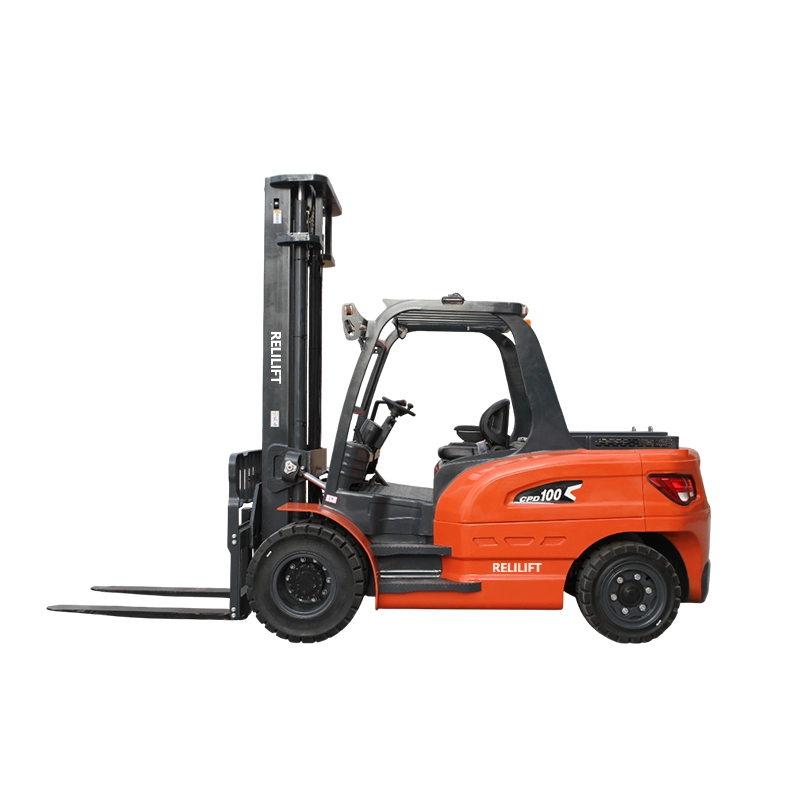
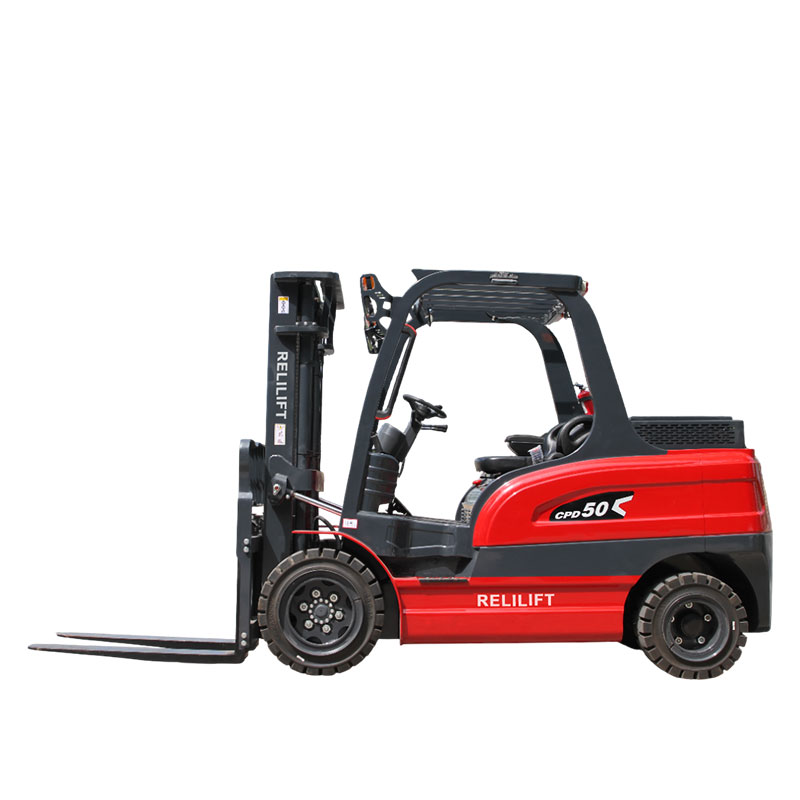
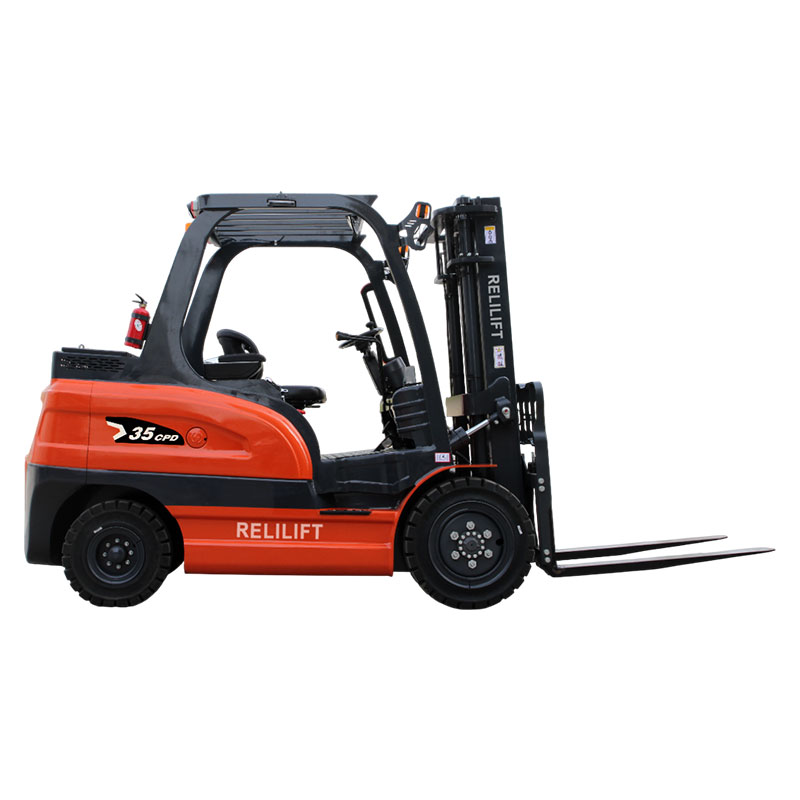
Electric forklift cost planning should begin with the work the truck must complete, not with a catalog price. For this guide, bulk material transfer means repeated movement of palletized, containerized, or unitized loads, rather than loose bulk solids. The decision should connect acquisition cost, battery and charger cost, energy, maintenance, labor, downtime, and replacement reserves with a measurable output such as pallets, totes, or tons moved per shift. A truck that is inexpensive to buy can still be expensive per completed move if its capacity, route, battery, or cycle time does not fit the operation. The RELILIFT electric forklift range includes several capacity classes and application configurations, so a useful quotation must be built around the actual material flow.
1. Define the material flow before comparing trucks
Start by describing one complete transfer. Identify the pickup point, drop point, average and maximum load, load dimensions, pallet or container type, travel distance, lift height, aisle width, floor condition, ramps, dock transitions, and required attachments. Then record demand by hour and by shift. Average daily volume is not enough when a dock, production line, or order wave creates a short peak that determines fleet size.
- Loads per shift and peak loads per hour.
- Average payload and maximum payload, including pallet, container, packaging, and attachment weight.
- Loaded and empty travel distance, lift height, rack position, and loading or unloading time.
- Number of shifts, productive hours, breaks, charging windows, and planned operating days.
2. Convert cycle time into usable productivity
A simple productivity model begins with a measured or conservatively estimated cycle. Add loaded travel, unloading, empty return, pickup, lifting and positioning, and the normal delay at intersections, doors, docks, or staging points. The basic relationship is: cycle time in minutes equals the total time for one completed move; theoretical cycles per hour equals 60 divided by cycle time; usable throughput equals theoretical cycles multiplied by the average payload and the proportion of scheduled time the truck actually performs productive work.
For pallet moves, keep output in pallets per hour. For mass-based transfer, multiply completed moves by the verified average payload. Do not treat rated capacity as expected payload unless the load, center of gravity, lift height, and attachment support that assumption.
3. Build a complete electric forklift cost model
An electric forklift quote should be separated into one-time, recurring, and risk-related costs. This keeps a low initial price from hiding the items that determine cost per completed move.
- Acquisition: truck, mast, capacity configuration, battery, charger, tires, attachments, freight, duties, commissioning, and operator familiarization.
- Energy: electricity, charging losses, demand charges where applicable, charging infrastructure, and the labor or space used for battery handling.
- Maintenance: scheduled service, inspections, tires, wear parts, hydraulic work, electrical diagnostics, and authorized repair labor.
- Productivity risk: downtime, blocked docks, waiting for a charger, damage, missed production transfers, overtime, rental coverage, and service-response delays.
- Replacement reserves: battery replacement, charger replacement, major components, and eventual resale or disposal assumptions.
A practical annual model is financing or depreciation plus energy, maintenance, tires, battery reserve, infrastructure, labor allocation, and downtime. Cost per move equals that annual total divided by completed moves. Use the same basis for every supplier and scenario. Because price varies with capacity, lift height, battery, attachments, freight, and trade terms, request a configuration-specific quotation.
4. Match battery and charger strategy to the duty cycle
Battery choice affects both cost and throughput. A single-shift operation with a long overnight charging window may support a different solution from a multi-shift warehouse that depends on opportunity charging. Compare usable energy, expected runtime under the planned load profile, charging time, charger compatibility, electrical supply, temperature conditions, maintenance procedure, replacement availability, and the effect of charging on the work schedule.
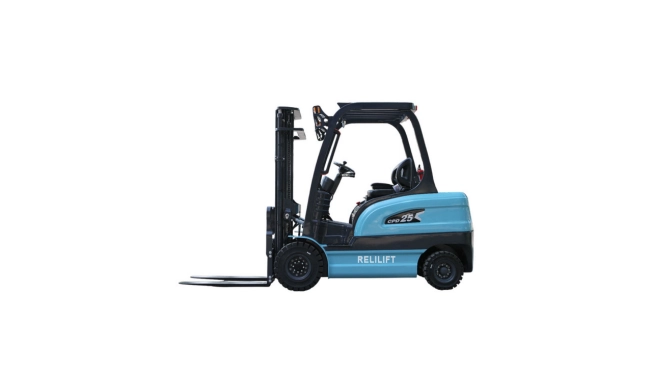
Lithium iron phosphate and lead-acid systems can have different purchase, maintenance, charging, and replacement profiles. Neither chemistry is automatically the lowest-cost option. Ask the supplier to model the battery and charger as part of the complete duty cycle, not as a separate accessory. The written proposal should identify the assumed hours, loads, charging pattern, temperature, and operating limits behind any runtime or productivity claim.
5. Check capacity, layout, and route constraints
Productivity falls quickly when the truck is oversized for the aisle, undersized for the load, or configured with a mast and attachment that reduce usable capacity. Confirm maximum load, load center, maximum lift height, residual capacity at that height, lowered mast height, turning dimensions, right-angle stacking clearance, door openings, ramp grade, floor loading, tire suitability, and trailer or dock access.
- Use the smallest correctly configured truck that can complete the full route with practical clearance and a safety margin.
- Do not count a load as acceptable solely because its weight is below the nameplate rating; load center, height, attachment, and stability matter.
- Compare the cost of a counterbalanced electric forklift with a stacker or pallet truck when the work is mainly low-level or horizontal movement.
6. Compare scenarios using cost per completed move
Build at least three scenarios: the lowest initial-cost configuration, the configuration that meets the measured peak, and a higher-flexibility option with more charging or fleet resilience. For each scenario, show trucks required, completed moves per shift, productive hours, energy use, planned maintenance, expected downtime, labor allocation, battery reserve, and cost per move. Use peak demand and service coverage to test whether one failed truck would stop the line or merely reduce buffer capacity.
7. Request the data needed for a defensible RFQ
Send suppliers the same application worksheet so the quotes can be compared on equal assumptions. Include the maximum and typical load, dimensions, load center, lift height, pallet or container, hourly demand, shift schedule, cycle route, floor and ramp conditions, temperature, charging window, attachments, tires, quantity, destination, and preferred commercial terms. Ask for a dimensional drawing, capacity information, battery and charger specification, maintenance schedule, parts scope, warranty scope, and service-response process.
RELILIFT describes customized material handling solutions and technical support and spare parts. Buyers should still confirm which support items are included for the quoted model, country, and trade term. If the project involves high-density storage, a smart warehouse solution may also be relevant because layout, aisle planning, and material flow can change the productivity result more than a small difference in truck price.
Conclusion
Electric forklift cost and productivity planning work best as one decision. Capacity, route geometry, cycle time, battery strategy, charging windows, operator time, and service support all influence the number of completed moves a truck can deliver and the cost of each move.
Before selecting equipment, measure the work, model the peak, and ask for configuration-specific data. A transparent comparison should show not only the purchase price, but also the cost of keeping the transfer process moving. That is the basis for a fleet that is financially defensible and operationally realistic.
Frequently Asked Questions
How much does an electric forklift cost?
The price depends on capacity, mast and lift height, battery and charger, tires, attachments, freight, market, and trade terms. Request a configuration-specific quotation instead of using a generic range as a budget commitment.
How do I calculate electric forklift productivity?
Measure the complete cycle time, calculate theoretical cycles per hour, and then apply realistic productive availability. Multiply completed cycles by the verified average payload to express output in pallets, containers, or tons.
Is lithium always cheaper than lead-acid?
No. Compare the complete duty cycle, including purchase price, charging windows, energy, maintenance, battery handling, replacement timing, and downtime. The lower-cost chemistry depends on how the truck is used.
How many electric forklifts does a bulk transfer operation need?
Divide peak demand by the verified usable throughput per truck, then test the result against charging, maintenance, traffic, and backup requirements. Time-study data is more reliable than a general cycles-per-hour assumption.
Request a configuration-specific quotation
To compare a truck against your actual transfer plan, send the load, dimensions, lift height, route, cycle target, shifts, charging window, operating conditions, quantity, and delivery location through Contact RELILIFT. The more complete the application data, the easier it is to check capacity, productivity, and total cost on the same basis.


 Related





Excellent Service Each and Every Time