

-
 admin
- 16th October 2026
Electric Forklift Safety Checklist: What Operators Should Check Before Use
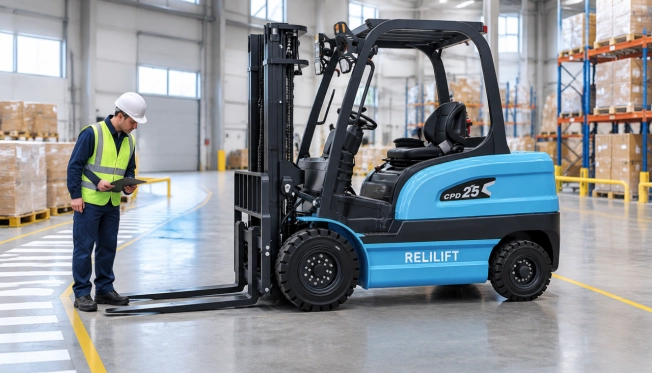
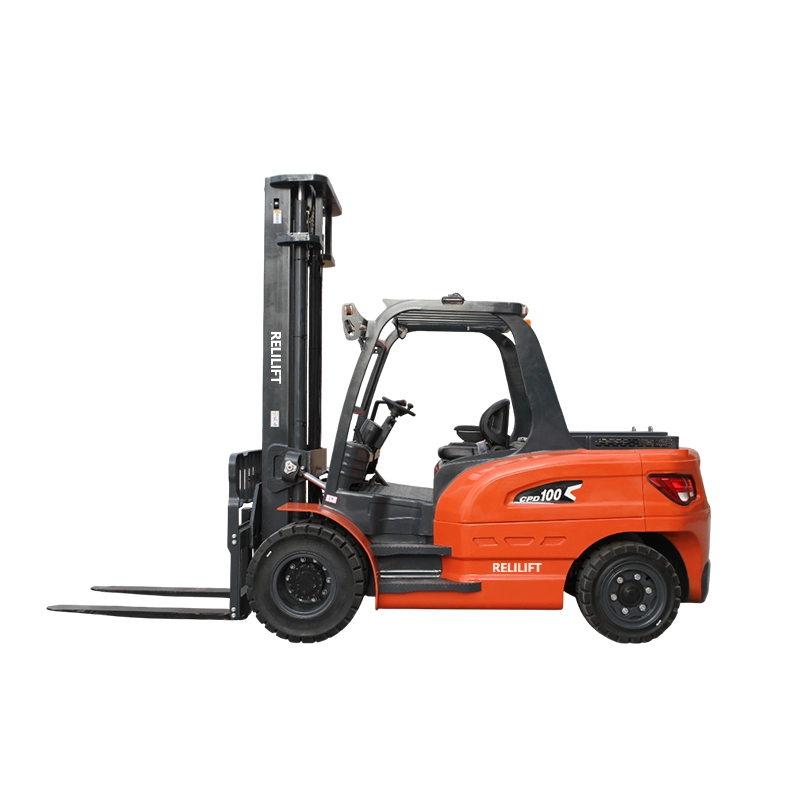
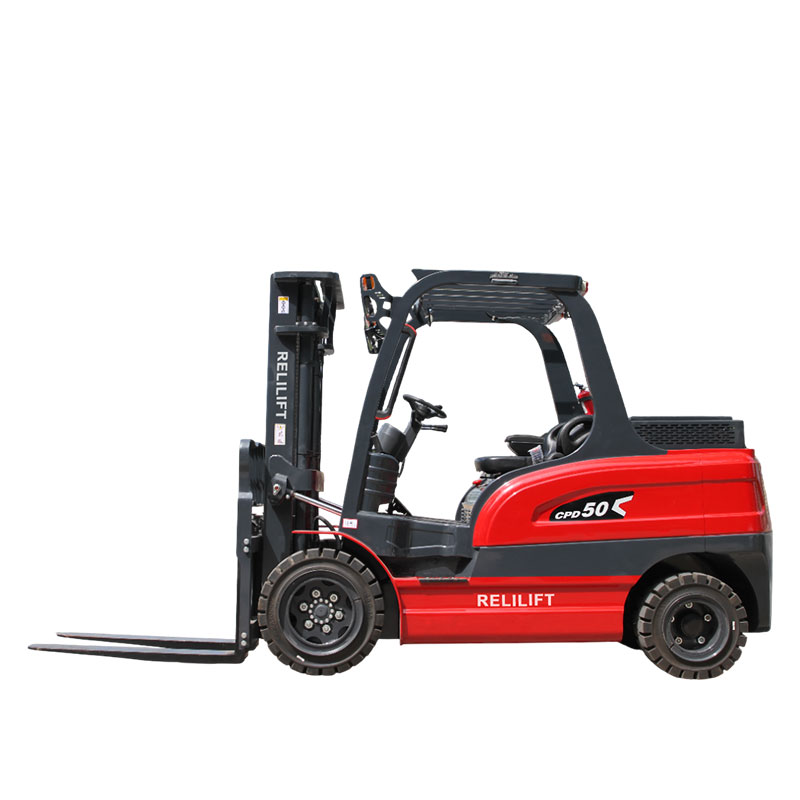
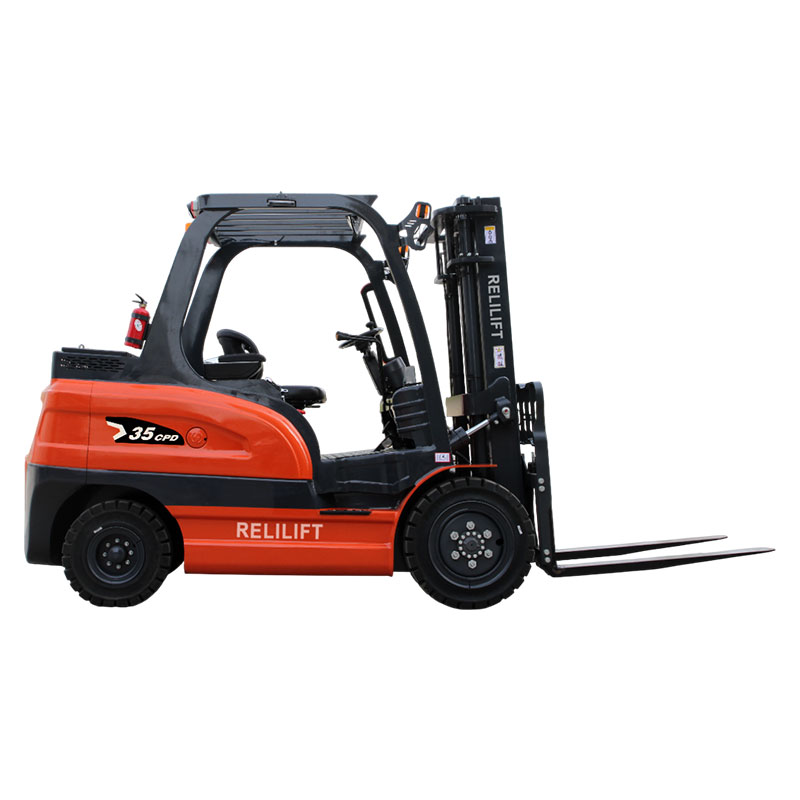
A practical electric forklift safety checklist starts with a documented walkaround and controlled function test. Check the battery, forks, mast, frame, controls, alarms, capacity information, and route. If a condition could affect safe operation, keep the truck out of service until it is evaluated and corrected. For equipment context, review the RELILIFT electric forklift range and then adapt the inspection points to the exact model, battery, attachments, and operating environment.
Why the pre-use check matters
A powered industrial truck can appear ready while still carrying a serious defect: a damaged fork heel, loose wheel hardware, a weak brake, a leaking hydraulic hose, or a battery cable with exposed damage. A pre-use inspection is intended to find those conditions before motion, lifting, or contact with a load creates a larger event. In the United States, the OSHA powered industrial truck standard states that industrial trucks must be examined before being placed in service, at least daily, and after each shift when they are used around the clock. Defects must be reported and corrected. Local law, the employer’s written program, and the manufacturer’s manual may require a more detailed or more frequent process.
The operator must be trained and authorized for the truck and site. A checklist supports, but does not replace, training, risk assessment, or formal maintenance.
1. Walk around the truck before power-up
Start with the truck parked in a safe area, forks lowered, power off, and the parking brake applied. Walk around the complete machine rather than checking only the operator’s controls. Look for conditions that are visible without disassembling anything.
- Check for fresh fluid, coolant, or electrolyte evidence under and around the truck. Do not operate with an unexplained leak.
- Inspect the frame, counterweight, overhead guard, load backrest, steps, handholds, and access panels for cracks, deformation, loose hardware, or missing guards.
- Examine forks for cracks, bends, excessive wear at the heel, damaged tips, and locking pins that are missing or not seated.
- Inspect the mast, chains, rollers, carriage, cylinders, hoses, and fittings for damage, abnormal slack, or leakage.
- Confirm that the capacity plate, warning labels, and operating decals are present and legible. Never rely on memory for rated capacity.
2. Check the battery and electrical system
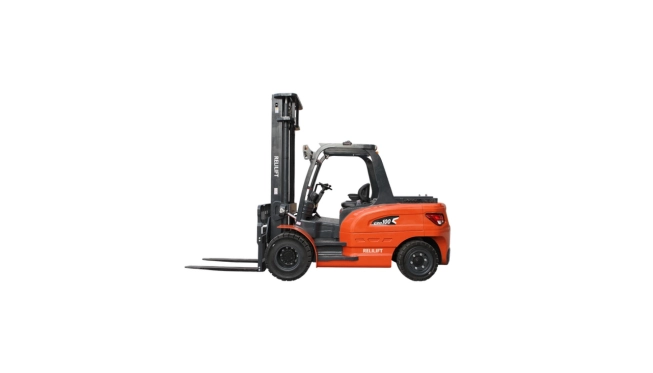
Electric trucks have no fuel tank or exhaust system, but the battery and electrical system remain critical safety areas. Confirm that the charge level is adequate for the planned work and that the battery is the correct type and is secured in its compartment. The inspection method must follow the battery manufacturer’s instructions. Lithium batteries and lead-acid batteries do not have identical service checks.
- Inspect battery cases, covers, cables, connectors, terminals, and visible wiring for cracks, corrosion, looseness, heat damage, or exposed conductors.
- Verify that the battery restraint, latch, and compartment cover are secure before travel. A battery that can shift changes vehicle balance and can damage connections.
- Check the charger, plug, and charging lead for damage. Use the specified voltage and charger for the truck and battery combination.
- For lead-acid equipment, use only the employer’s trained procedure for electrolyte and ventilation checks. Never use an open flame or improvise a battery repair.
3. Test controls and safety devices in a clear area
After the visual inspection passes, move to a clear, level test area with no pedestrians or nearby obstacles. Keep the forks low and test one function at a time. The goal is to confirm predictable response, not to perform production work during the inspection.
- Turn on the truck and check the display, warning indicators, hour meter, battery indicator, and any diagnostic messages.
- Test the horn, lights, reverse alarm, blue or warning lights if fitted, mirrors, and other site-required warning devices.
- Test service brakes, parking brake, steering, forward and reverse travel, and the direction control at low speed.
- Raise, lower, and tilt the mast without a load. Watch for jerky motion, drift, unusual noise, or hydraulic leakage.
4. Confirm the route, load, and workplace
A truck can pass a mechanical check and still be unsuitable for the planned move. Before picking up a load, confirm that the route and load match the truck’s rated configuration. The capacity plate applies to a particular truck, mast, load center, and attachment combination; a different attachment or a higher lift can reduce usable capacity.
- Confirm that the load is stable, within the rated capacity, centered on the forks, and not damaged in a way that could shift during travel.
5. Decide what happens when a defect is found
The correct response to a failed item is not to make a note and continue. Stop the truck, lower the forks, apply the parking brake, isolate the equipment according to the site procedure, and report the defect to the responsible supervisor or maintenance team. A truck that is not in safe operating condition should be removed from service until an authorized person completes the repair and the required recheck. The RELILIFT after-sales support page describes technical guidance, troubleshooting, spare-parts support, and maintenance assistance; the actual response terms should be confirmed for the purchased configuration and location.
Use a simple pass, report, remove record
A useful inspection form has three practical outcomes. Pass means the item is ready for service. Report means the condition needs attention but the responsible person must decide whether operation is permitted under the written program. Remove from service means the truck cannot be used until corrected. Add the date, truck identification, operator or inspector name, defects found, corrective action, and release authorization. Records help supervisors identify repeated failures instead of treating every defect as an isolated event.
A practical operator sequence
- Park safely, lower the forks, apply the brake, and switch off power before the walkaround.
- Inspect the frame, guards, forks, mast, hydraulics, wheels, tires, labels, and visible leaks.
- Check battery condition, restraints, cables, connectors, charger condition, and charging-area readiness.
- Power up in a clear area and test indicators, warning devices, brakes, steering, travel, and lifting functions.
- Confirm the route, load center, capacity information, clearances, floor conditions, and pedestrian controls.
- Record the result. Do not operate the truck when a safety-related defect remains unresolved.
Conclusion
Operators should treat the pre-use inspection as a decision point: the electric forklift is either ready for the planned task, or it is not. A complete check combines a visual walkaround, battery and electrical review, controlled function test, and confirmation that the load and route fit the truck’s configuration.
The most reliable checklist is specific, documented, and connected to a clear defect-response process. Review it whenever the truck, attachment, battery, site, or work pattern changes. If the checklist identifies a recurring issue, use the maintenance record and supplier support process to correct the cause rather than repeatedly accepting the same risk.
Frequently Asked Questions
How often should an electric forklift be inspected?
At minimum, follow the applicable law, employer program, and manufacturer instructions. For U.S. operations, OSHA’s powered industrial truck rule calls for examination at least daily and after each shift when trucks are used around the clock. A site may require checks at the start of every operator shift or after a significant event.
Can an operator use a truck if the battery indicator is full but a cable is damaged?
No. A full charge does not make a damaged cable, connector, or battery restraint safe. Stop the truck and report the condition through the site’s defect process.
Is one checklist suitable for every electric forklift?
Use a common base form only when it is supplemented with model, battery, attachment, and site-specific items. The capacity plate, operator manual, and workplace risk assessment should control the final checklist.
Can operators repair defects during the pre-use check?
Only when the employer’s written program specifically authorizes the task and the person is trained and competent to perform it. Electrical, hydraulic, structural, and safety-device repairs normally belong to authorized personnel.
Request a fit-specific safety review
For a configuration review, send the truck model, battery type, attachments, load dimensions, operating area, shift pattern, and any recurring inspection issue to Contact RELILIFT. Ask for the applicable operating and maintenance information for the exact configuration rather than relying on a generic checklist.


 Related





Excellent Service Each and Every Time